

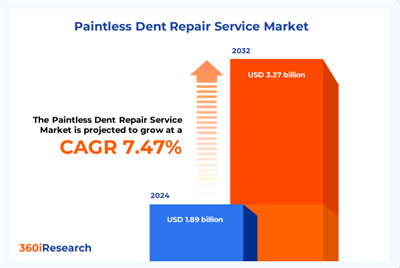
The report highlights that PDR services include both traditional workshop repairs and mobile/on-site repair services, mainly applied to dents caused by hail damage, minor collisions, and parking-related impacts. Key growth drivers include: Rising consumer demand for fast and cost-effective repair solutions Continuous growth in global vehicle ownership, leading to more minor body damage incidents Insurance companies increasingly favoring PDR, as it is cheaper and faster than conventional bodywork and repainting Source: 360iResearch Impact ⚡ Stable Growth in Service Demand Seasonal damage (such as hailstorms) and everyday minor dents are making PDR a more routine repair choice. 🛠️ Strong Cost and Efficiency Advantages Paintless repair significantly reduces labor time and material […]

To address the challenges posed by modern vehicle materials-such as aluminum alloy panels and carbon-fiber structures-as well as increasingly complex body designs, the latest generation of PDR equipment integrates visual detection, precise dent mapping, and real-time micro-adjustment tools. These technologies allow technicians to identify dent locations, depth, and metal tension more accurately, leading to faster repairs and more consistent results while reducing the risk of paint damage. Source: Auto Clinique Impact 🔧 Higher Repair Quality Advanced detection tools enable technicians to repair smaller and more complex dents, expanding the scope of PDR applications. 📊 Industry Professionalization The PDR sector is becoming more technology-driven, with skillsets increasingly dependent on advanced tools […]
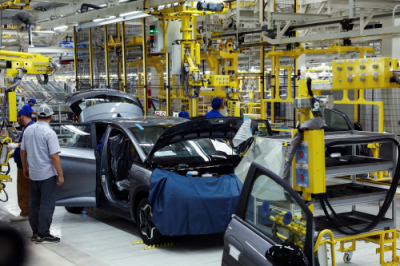
According to MarketersMEDIA News Center, DentWerx emphasizes the use of PDR technology to eliminate conventional repair steps such as sanding, fillers, and repainting. This significantly reduces volatile organic compound (VOC) emissions, lowers energy consumption, and minimizes repair-related waste. In addition to environmental benefits, PDR offers faster repair turnaround times, preserves factory paint quality, and helps maintain higher resale values for vehicles, making it increasingly attractive to both consumers and insurers. Impact 🌍 Lower Environmental Footprint PDR reduces emissions and waste compared with traditional body repair methods, supporting greener automotive aftersales services. 📈 Growing Market Demand Vehicle owners affected by hail damage or minor collisions increasingly prefer PDR due to speed, […]
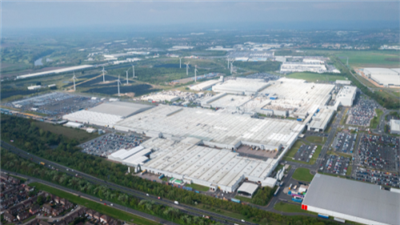
In November, UK car production reached approximately 63,126 units, down 1.7% year-on-year. Stability was supported by Jaguar Land Rover’s return to production after a nearly six-week shutdown caused by a cyberattack, as well as Nissan starting EV production in Sunderland. However, when including commercial vehicles, total vehicle output still fell 14% compared to last year. Industry stakeholders remain cautiously optimistic about the medium- to long-term outlook, despite ongoing challenges related to costs, regulations, and market demand. Source: Reuters Impact ⚡ Commitment to Electrification Nissan’s EV expansion confirms that major manufacturers remain committed to electrification despite short-term market volatility. 📈 Production Recovery Boosts Confidence JLR’s recovery supports UK manufacturing stability, supply-chain […]
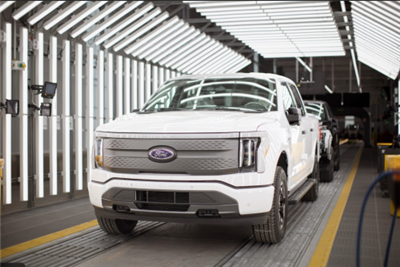
Ford will cancel the all-electric F-150 Lightning successor (Project T3), halt its electric commercial van program, and terminate its battery joint venture with South Korea’s SK On. Going forward, the company will shift its focus toward hybrid vehicles and extended-range electric vehicles (EREVs) that use onboard engines as generators. Ford plans to maintain a product mix of roughly 50% hybrid and electrified models by 2030. Additionally, part of Ford’s battery manufacturing capacity will be converted to produce energy storage systems, signaling diversification beyond passenger EVs. Impact 🌍 Industry Direction Shift This move highlights a strategic retreat by traditional U.S. automakers from aggressive EV expansion, reflecting growing caution around full electrification […]

• The Trump administration’s NHTSA unveiled a proposed rollback to the current CAFE timeline, requiring a 34.5 miles per gallon fleet average by model year 2031 instead of the previous 50.4 MPG target established under the prior administration. • NHTSA’s own analysis shows this change could cut upfront vehicle costs by roughly $930 for consumers but increase total U.S. gasoline consumption by ~100 billion gallons through 2050 and boost CO₂ emissions by about 5% compared with the previous rule. • The proposal also includes modifications to CAFE’s credit trading system and reflects broader policy efforts to ease regulatory burdens on automakers. Impact: On automakers: 🔹 Traditional OEMs (Ford, GM, Stellantis) benefit from reduced […]