

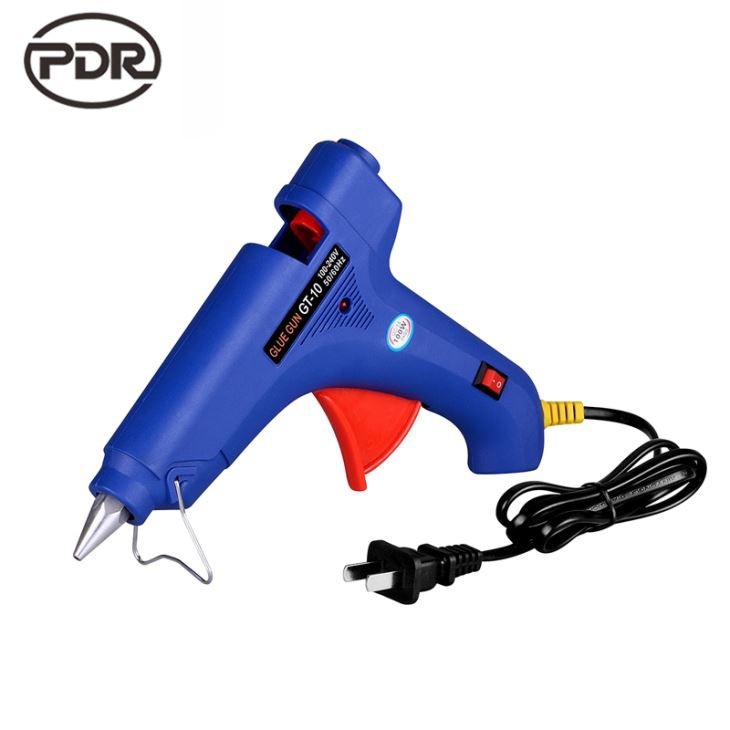
PDR glue tabs usually fail for five reasons: the panel is contaminated, the panel temperature is wrong, the glue temperature is wrong, the tab size does not match the dent, or the pull direction is uncontrolled. Successful glue pulling is a system of surface prep, glue choice, dwell time, pull force, release method, and line-board inspection.
Glue pulling is one of the most useful PDR methods because it works from the outside of the panel. It can start repairs where rods cannot reach and it can move many hail dents quickly. But it is also one of the easiest methods to misuse.
Quick answer
Glue tabs usually fail because the panel or tab is contaminated, the glue or panel temperature is wrong, the tab shape does not match the dent, or the pull direction loads the adhesive unevenly. Fix the process before increasing force.
Quick troubleshooting table
| Symptom | Likely cause | Correction |
|---|---|---|
| Tab falls off before pulling | Dirty panel, wax, silicone, moisture | Clean panel and tab; dry completely |
| Glue strings but does not bond | Glue gun too cool or glue not fully melted | Let glue gun reach stable temperature |
| Glue becomes brittle | Panel or air temperature too cold | Warm panel within safe limits; use suitable glue |
| Paint-safe pull is weak | Tab too small or puller angle wrong | Match tab to low area; pull perpendicular to panel |
| Tab overpulls a high spot | Pull too strong or dwell too long | Reduce force; use smaller tab; knock down high |
| Glue residue hard to remove | Wrong release method or too much glue | Use proper release agent and controlled glue amount |
| Dent lifts unevenly | Tab placed off center or wrong tab shape | Re-read dent with line board and reposition tab |
Step 1: Clean the panel and the tab
Most glue failures begin before the glue touches the car. Wax, polish, road film, silicone dressing, dust, and moisture can all weaken the bond. A clean panel should feel dry and free from slippery residue.
Clean both surfaces:
- Clean the repair area.
- Clean the glue tab face.
- Dry the surface completely.
- Avoid touching the tab face with fingers after cleaning.
- Check the reflection again before placing the tab.
If the panel has been recently waxed or detailed, cleaning may require more care. Do not use aggressive chemicals that could damage paint. The goal is a clean, paint-safe surface.
Step 2: Control temperature
Glue pulling is temperature sensitive. If the panel is too cold, the glue may become brittle and release early. If the panel is too hot, the glue may stay soft and stretch instead of transferring force. The glue gun also needs time to reach a stable working temperature.
A technician should think about three temperatures:
- Glue gun temperature.
- Panel temperature.
- Ambient air temperature.
Do not assume that a glue stick behaves the same in every shop. Mobile repair in winter, summer sun on a black hood, and an air-conditioned workshop all create different glue behavior. Select glue type and dwell time for the environment.
Step 3: Match tab shape to dent shape
A glue tab is not just a handle. It controls where force enters the panel. A round tab works well for a round low. A crease tab spreads force along a line. A large tab can lift a wider area but may overpull if the dent is small.
Match the tab to the visible low, not to the normal photo. Use the line board:
- If the low is round, center a round tab over the low.
- If the low is long, use a crease tab aligned with the low.
- If the dent has a strong crown, reduce the crown before pulling hard.
- If the dent is near an edge, use less aggressive force and inspect paint risk.
Step 4: Pull in the correct direction
The cleanest pull is usually perpendicular to the panel surface. Pulling at an angle can shear the glue, slide the tab, or create uneven metal movement. A mini lifter gives controlled vertical force. A slide hammer gives stronger impulse force. A bridge puller spreads load through its feet and can be useful for small controlled repairs.
Use the weakest tool that moves the metal. Stronger force is not always better. A heavy slide-hammer pull can turn one low spot into several highs and lows.
Step 5: Watch the crown, not only the center
Every dent has a low and often a high crown around it. Glue pulling the center without managing the crown may make the center pop up while the surrounding panel stays distorted. The line board should guide the sequence:
- Identify the low and crown.
- Reduce the crown if needed.
- Place the tab on the controlled low.
- Pull gradually.
- Knock down highs.
- Re-check the reflection.
This loop is more reliable than trying to finish the dent with one large pull.
Step 6: Remove glue safely
Glue removal should be controlled and paint-safe. Use the proper release agent and give it time to work. Do not scrape aggressively. If the paint is weak, repainted, cracked, or poorly bonded, glue pulling carries higher risk.
Before glue pulling on a repainted panel, a technician should inspect carefully and explain the risk to the customer. Glue pulling is most predictable on stable paint.
Glue pulling workflow for a small door ding
- Clean panel and tab.
- Place the line board so the low is clear.
- Choose a tab slightly smaller than the low area.
- Apply enough melted glue to fill the tab face without excessive overflow.
- Place the tab centered over the low.
- Allow glue to set for the current temperature.
- Pull with a mini lifter or bridge puller.
- Release glue and inspect.
- Knock down any high.
- Repeat with smaller tabs as the dent becomes shallower.
Glue pulling workflow for hail damage
Hail repair is different because the technician is managing many dents, not one. A repeatable process matters:
- Map dents by panel and size.
- Group similar dents for similar tabs.
- Keep the light position consistent.
- Use organized tab cleaning and glue management.
- Finish each panel with line-board inspection.
Efficiency comes from consistency, not from pulling harder.
When glue pulling is not the right first move
Avoid or delay glue pulling when:
- Paint is cracked or lifting.
- The panel was recently repainted and adhesion is uncertain.
- The dent is extremely sharp and needs rear micro-control.
- The panel is dirty, wet, or contaminated.
- The user does not have a reflection light to read the result.
Super PDR tool path
Super PDR glue pulling kits can be paired with mini lifters, bridge pullers, slide hammers, glue guns, glue tabs, release agents, knockdowns, and line boards. The best setup depends on dent size and user level. Beginners should prioritize controlled pulling and reflection reading before using strong impulse tools.
Short FAQ
Why do PDR glue tabs pop off?
Most tabs pop off because the panel or tab is contaminated, the temperature is unsuitable, the glue is not fully melted, or the pull angle creates shear force.
Should I use a bigger glue tab?
Use a tab that matches the low area. Bigger tabs can lift more metal, but they can also overpull and create highs.
Can glue pulling damage paint?
It can, especially on cracked, weak, repainted, or poorly bonded paint. Always inspect the paint before pulling.
Is a slide hammer better than a mini lifter?
A slide hammer is stronger. A mini lifter is more controlled. The better choice depends on dent size, metal movement, and finishing skill.