

Quick answer
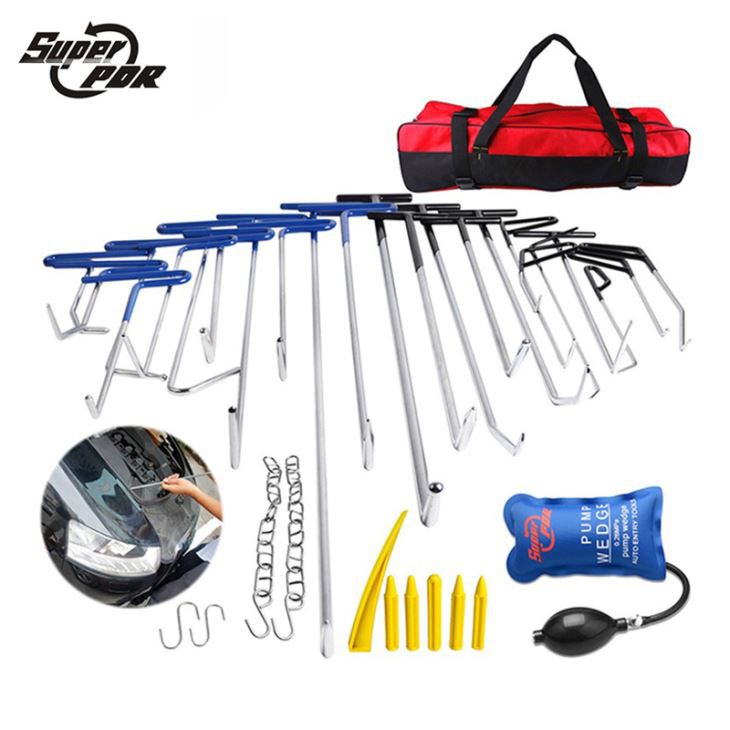
Validate PDR packaging as a complete packed product moving through a defined distribution route. Check how long rods, working tips, heavy components, small parts, and powered accessories are restrained and protected. An undamaged outer carton or a single informal drop does not prove that the kit inside will arrive complete and usable.
This guide is a buyer and supplier planning framework. It does not claim that any SuperPDR package has passed an ISTA test or provide a substitute for a selected laboratory procedure.
Start with the actual shipping route
Record whether the order moves as a single parcel, a consolidated shipment, a pallet, or through a distributor that opens and repacks the goods. Include storage and handling between transport stages. The final customer may receive a different package from the one inspected at the factory.
ISTA's design and testing guidance emphasizes understanding the distribution environment and tracking product and packaging changes when deciding on testing and retesting. The appropriate test should be selected for the packaged product and route, not simply because another supplier advertises the same procedure number.
Work with a qualified packaging or test provider where formal validation is needed. Establish the relevant procedure, specimen requirements, conditioning, sequence, and acceptance criteria before testing.
Map the kit's damage mechanisms
| Kit element | Packaging question | Arrival check |
|---|---|---|
| Long rods | Can the shaft move, bend, or load against an unsupported section? | Compare geometry and condition with the approved reference |
| Working tips | Are contacts protected from impact and abrasion? | Inspect contact surfaces and protective covers |
| Heavy components | Can they strike lighter or delicate items? | Check restraint and damage to adjacent contents |
| Small parts | Can they escape, mix, or become unidentifiable? | Reconcile labeled compartments with the component list |
| Lights and controls | Are vulnerable surfaces, joints, and connectors protected? | Perform permitted visual and functional checks |
| Consumables | Are closures and identities preserved? | Check leakage, condition, and traceability |
The table identifies questions to investigate. It does not prescribe one foam thickness, carton grade, or restraint arrangement for every kit.
Define success at the product level
Agree what constitutes acceptable and unacceptable change before the evaluation. Cosmetic carton damage, missing contents, bent tools, damaged contact surfaces, and failed equipment are different outcomes.
Include the condition of labels, instructions, replacement references, and component organization where these are necessary for correct use. A kit can arrive physically intact but still be difficult to identify or assemble if the packaging loses its part mapping.
Use the PDR kit BOM guide to connect the packed quantity to the approved configuration. Packaging validation should preserve that configuration, not merely keep a bag closed.
Keep informal checks separate from formal testing
A workshop check can reveal obvious movement, contact, missing restraint, or packing inconsistency. It is useful development evidence, but it is not automatically an ISTA test, certification, or statistical proof of shipping reliability.
If a formal test is commissioned, retain the procedure version, laboratory identity, specimen details, complete package specification, results, and deviations. An outcome applies to the tested configuration and stated conditions. Do not imply unrestricted approval for heavier variants, changed inserts, or another shipping route.
ISTA's procedure directory distinguishes procedures for different distribution circumstances. Selecting the appropriate one requires more information than the product's commercial name.
Include receiving inspection in the evidence chain
At receipt, photograph the unopened package where relevant, note external condition, and open it using a controlled method that does not create damage mistaken for transit damage. Compare contents against the packing list and approved arrangement.
Record where any movement or contact occurred. Retain packaging when a claim or investigation is likely, following the agreed process. Do not discard the insert that may explain why a tool was damaged.
For powered or mechanical items, use only the permitted incoming functional check. Transport testing does not authorize unsafe operation of a damaged device. Hold any item whose condition or safety is uncertain.
Illustrative mixed-weight kit problem
A kit contains long rods, a heavier pulling component, and a small inspection accessory. After transport, the carton looks acceptable, but the heavier item has shifted and contacted the accessory. The original packing photograph shows the items separated only by a loose divider.
The next design review should address restraint and product-to-product contact, then repeat the relevant evaluation. Simply choosing a stronger outer carton may not solve the internal movement. The revised package must be assessed as a complete configuration.
This is a hypothetical failure mechanism, not an observed defect in a SuperPDR kit or proof that a particular insert material is sufficient.
Control changes after approval
Record carton dimensions and construction, inserts, restraint, component positions, closures, labels, packed mass, and the exact product configuration. Review whether retesting is needed when any important element changes.
Include distributor repacking in change control. Splitting a bulk carton into individual customer parcels can remove protection that was present in the original test. A private-label artwork change may be minor, while moving a heavy component or changing a case can be significant.
For batteries, liquids, or other potentially regulated contents, obtain the appropriate transport classification and packing guidance from qualified parties. A general distribution test does not settle dangerous-goods obligations.
Preparing a SuperPDR packaging request
Provide the destination, route, order configuration, final customer package, and acceptance criteria in the SuperPDR enquiry. Ask for the current packing specification and any applicable test evidence with its scope, rather than requesting a generic export-quality claim.
Use the OEM sourcing guide to retain the approved package with the product specification. Repeat orders should preserve the actual protective arrangement, not just the logo and outer dimensions.