

Quick answer
Plan mobile PDR power by listing every device, matching each to an approved supply, and testing the expected work sequence. Separate instantaneous power demand from stored energy and measured usable runtime. A plug that fits or a battery with a large amp-hour label does not establish compatibility or a full working day of operation.
This guide supports equipment planning. It is not a vehicle-wiring design, an inverter-installation instruction, or permission to modify a battery, charger, cable, or protective device.
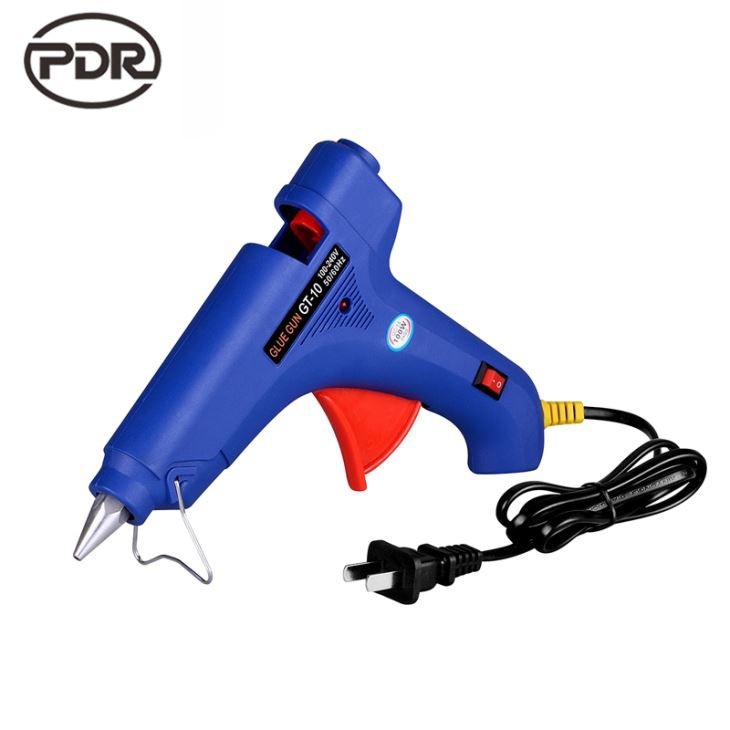
Build a device-level load list
Record the inspection light, glue gun, chargers, and other equipment intended for the job. Include the exact configuration rather than using a broad kit name. Distinguish equipment operating at the same time from equipment used sequentially.
For each device, retain the rated input, AC or DC requirement, connector or battery interface, approved supply, and any operating or environmental limitations. A nominal voltage alone is not a complete electrical specification.
For permanent vehicle electrical work, use appropriately qualified installation and the applicable equipment and vehicle requirements. Do not treat the planning worksheet below as a design for cable sizes, fuses, grounding, or vehicle modifications.
Separate power, energy, and runtime
Power, expressed in watts, describes the rate of energy use. Energy, commonly expressed in watt-hours, describes an amount available or consumed. Runtime depends on usable energy and the actual average load, as well as device limits and operating conditions.
For a battery whose label provides nominal voltage and amp-hours, nominal energy can be estimated as voltage multiplied by amp-hours. That is not the same as usable energy delivered to the tool. Conversion losses, reserve limits, battery condition, temperature, and load behavior can change what is available.
Do not compare amp-hour values across different voltages as though they represented the same stored energy. Use the manufacturer's stated watt-hour value where available and preserve its rating context.
Illustrative runtime calculation
Assume a hypothetical compatible supply is rated at 18 V and 5 Ah. Its nominal energy is 18 x 5 = 90 Wh. For planning only, assume 70% of that nominal energy reaches the load within the chosen usable operating window: 90 x 0.70 = 63 Wh.
If the hypothetical average load is 15 W, estimated runtime is 63 Wh / 15 W = 4.2 hours. The 70% factor and the 15 W load are illustrative assumptions, not measured SuperPDR values or a recommended design margin.
The estimate is invalid if the supply is not approved for the device or cannot support its operating demands. A correct calculation cannot make an incompatible electrical combination acceptable. Confirm the result with a safe, manufacturer-permitted test of the actual setup.
Use a planning worksheet
| Device field | Record | Verification |
|---|---|---|
| Device and revision | Exact light, gun, charger, or accessory | Check against the supplied unit |
| Input | Full rating and AC/DC requirements | Read the label and instructions |
| Supply | Approved battery or power unit | Obtain documented compatibility |
| Working mode | Selected settings and expected sequence | Reproduce the intended use during testing |
| Energy basis | Rated energy and any planning assumptions | Keep estimates separate from measurements |
| Service plan | Approved spare, charging location, and replacement reference | Confirm availability without inventing a supplier promise |
For cycling loads, such as some heated tools, a single instantaneous reading may not represent average use. Measure or obtain relevant information across the actual sequence rather than assuming constant nameplate consumption or constant idle consumption.
Treat adapters as controlled components
An adapter can change the connection without establishing that every electrical and protection requirement has been met. Obtain approval for the device, adapter, and battery as a complete arrangement.
The Anson cordless glue gun page identifies different battery arrangements for its own product. It does not prove cross-brand compatibility with another gun. Record the exact adapter and battery identity when evaluating any proposed mobile kit.
Do not defeat a protection feature to extend runtime, use a damaged lead, or charge with an unapproved device. OSHA's lithium-battery safety bulletin emphasizes device-specific instructions and approved battery and charger arrangements. Its safety guidance is not a certification of a particular PDR setup.
Test a representative working sequence
Set a defined starting condition and record the equipment, battery, operating modes, environment, and sequence. Decide what counts as the end of usable operation before starting: a device warning, shutdown, or inability to maintain the task within the instructions.
Include ordinary setup and idle periods if they form part of the intended job. A continuous-light test and a mixed light-and-glue-gun workday are different conditions. Report them separately.
If the device or battery exhibits abnormal heat, swelling, damage, or other unsafe behavior, stop use and follow the applicable safety and emergency procedures. Do not continue a test merely to obtain a longer runtime figure.
Plan charging and backup without promising uninterrupted work
Identify where and when approved charging can occur, how equipment is protected during transport, and what happens when the primary supply is unavailable. A backup should be compatible and maintained, not simply present in the vehicle.
For a SuperPDR mobile-tool enquiry, provide the load list, intended region and supply arrangement, expected sequence, and transport needs. Request exact ratings and approved accessories for the quoted configuration.
After delivery, retain the measured operating record with the kit. Repeat the check when a critical power component or working mode changes. The result should be a realistic service plan with clear limitations, not an unsupported all-day performance claim.