

Does Windshield Repair Restore Strength? Structural Integrity, Limits, and Verification
People ask: “Is a repaired windshield as strong as new?”
A responsible answer must define what “strength” means and acknowledge limits. Repairs can stabilize damage and reduce crack growth risk—but some cases still require replacement.
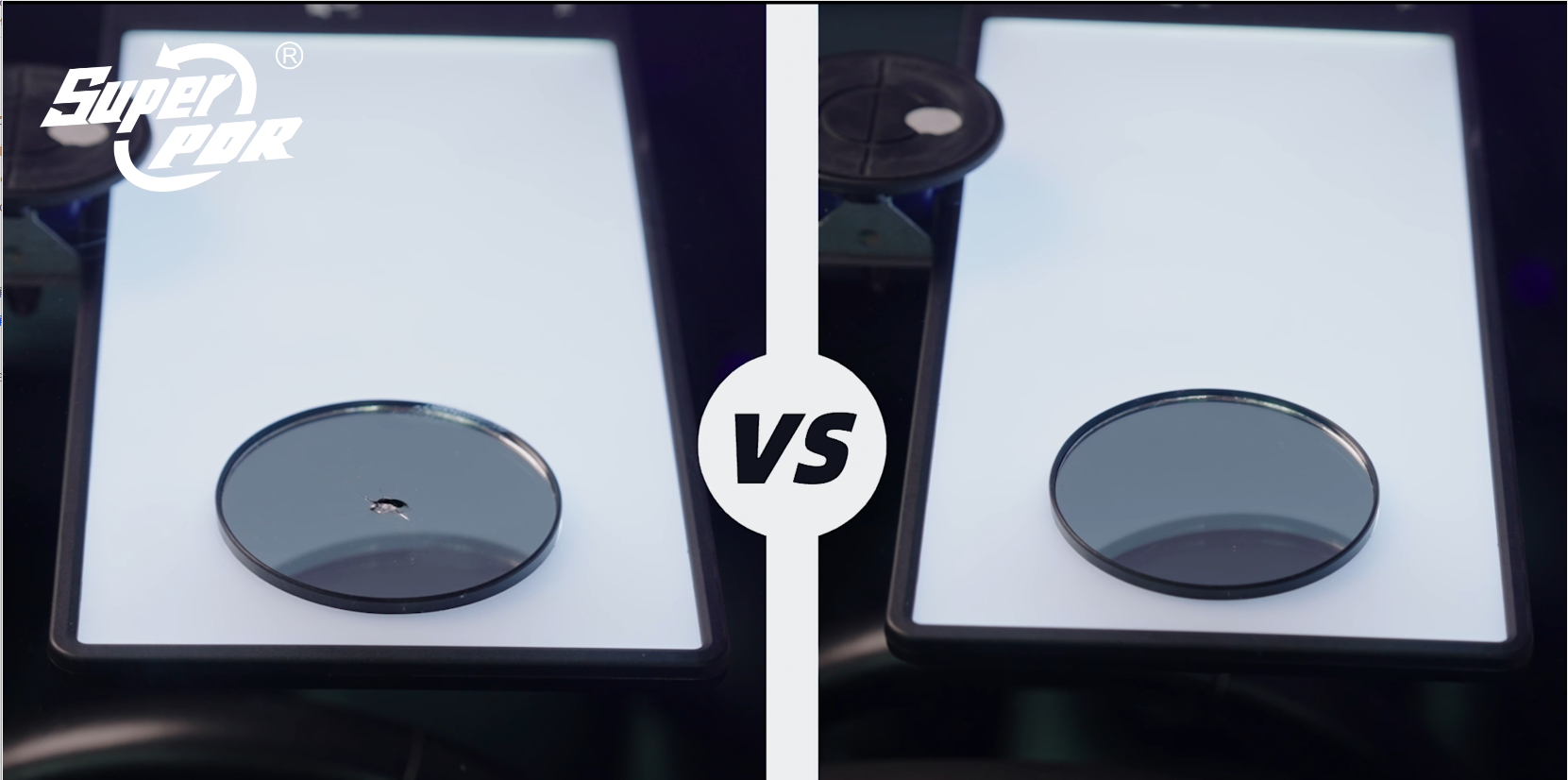
3.1 What windshield repair can realistically achieve
- stabilize crack tips and reduce further spreading,
- improve optical clarity and reduce glare,
- reduce moisture ingress that worsens cracks.
For fleets, the biggest value is operational: fewer cracks turning into replacements and less downtime.
3.2 What repair cannot promise
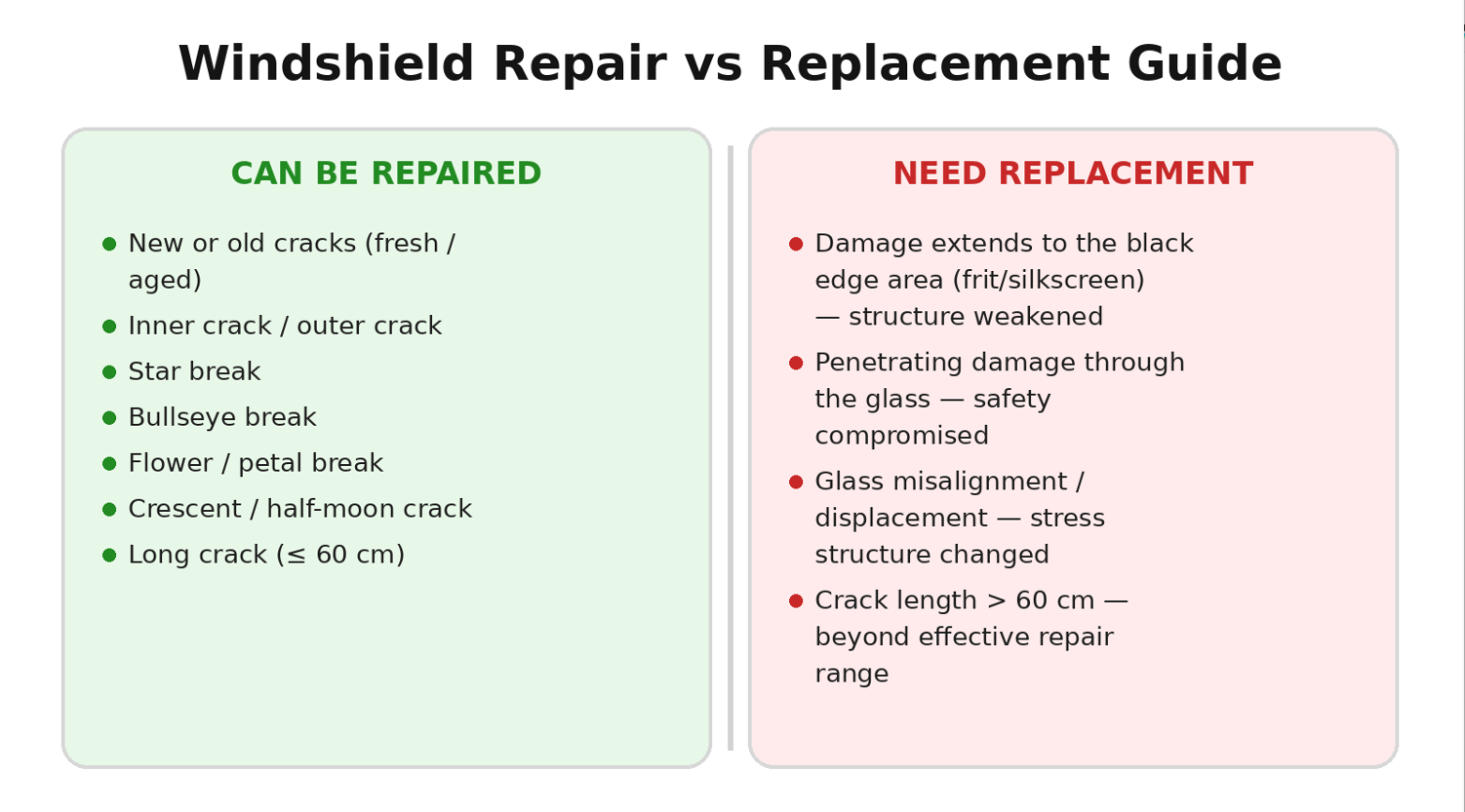
Replacement is recommended when:
- damage is long or actively spreading,
- damage is near edges or in high-risk zones,
- visibility cannot be restored,
- OEM requirements or sensor zones demand replacement.
Avoid absolute promises. Use clear repairable versus not-recommended boundaries.
3.3 Post-repair verification workflow (QC)
A) Visual clarity check
- From driver angle: is glare reduced and is distortion acceptable?
- Under angled light: are there unfilled legs or persistent bubbles?
B) Surface finish check
- Pit filled flush, smooth finish, no sharp edges.
C) Stability check
- No active crack growth after cure and finish.
D) Documentation (important for B2B)
Record:
- damage type and location,
- curing method,
- completion time,
- before/after photos.
Documentation improves repeatability and reduces disputes.
3.4 Practical guidance for inspection-related scenarios
Inspection outcomes depend on local rules and damage zones.
Your role is to provide a transparent repair process and clear boundaries:
- repair early,
- verify clarity,
- document outcomes,
- recommend replacement when needed.
Checklist
- Damage classified and recorded with photos.
- Break dried and cleaned.
- Full fill achieved with no visible bubbles.
- Repair fully cured.
- Surface finished flush.
- Driver-angle clarity checked.
- Repair log saved.
Frequently Asked Questions
Q1: Will this improve the chance of passing inspection?
A: Repairs may improve clarity and safety, but inspection outcomes still depend on local rules, damage size, and damage location.
Q2: When should I replace instead of repair?
A: Replacement is generally recommended for long cracks, edge damage, severe distortion, or OEM/sensor-zone restrictions.
Q3: What is the biggest cause of repair failure?
A: Moisture, contamination, and incomplete filling are among the most common causes.