


Engineering & Technology The U9 Xtreme showcases BYD’s most advanced EV engineering to date. Its four electric motors, each capable of spinning at 30,000 rpm, work together with the high-voltage platform to achieve unprecedented power delivery. The vehicle uses a specially reinforced Blade Battery system designed for extreme thermal and discharge demands. Handling and stability at high speed are enhanced by BYD’s DiSus-X intelligent body control system, a full carbon-fiber aerodynamic package, and a track-grade semi-slick tire compound co-developed with Giti. The braking system features titanium components and carbon-ceramic rotors for high-temperature endurance. Track Achievements Beyond its top-speed record, the U9 Xtreme also recently completed a lap of the Nürburgring […]
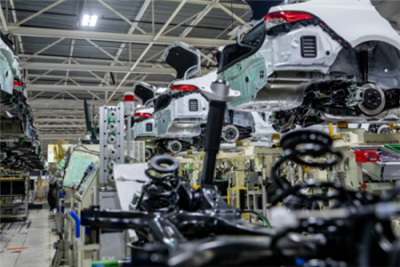
The investment is part of Toyota’s broader vision to invest up to US$10 billion in the U.S. market, enhancing its hybrid vehicle manufacturing footprint. The move signals the company’s confidence in hybrid technology as part of its electrification strategy. Implication: For the industry, this indicates that hybrids remain a key transitional technology between internal combustion engines (ICE) and full electric vehicles (EVs). Automakers are hedging by boosting hybrid capacity even as full EV adoption remains uncertain.
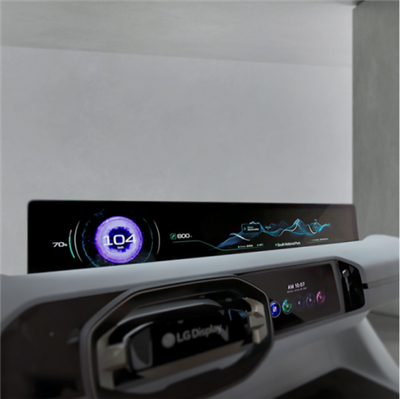
Dual View OLED enables a single in-vehicle display to show different content depending on the viewer’s position (for example, driver sees navigation while a passenger watches entertainment). Operates in extreme conditions - from -40 °C to 85 °C. SDN — Science & Digital News+1 UDC-IR OLED conceals an in-screen driver-monitoring infrared camera, maintaining full-screen aesthetics while supporting future mandatory driver-monitoring systems. Stock Titan LG Display aims to showcase these technologies and new large-format OLEDs at CES 2026 in Las Vegas, targeting automotive suppliers and manufacturers. SDN — Science & Digital News Implication: These innovations reflect how automotive interiors are becoming increasingly “display-centric” and intelligence-rich. Suppliers like LG Display are shifting from merely […]
The growth was driven by China (approx. 1.3 million units) and Europe (sales up 36%), while North America saw a 41% drop to around 100,370 units. Analysts attribute the U.S. decline to the expiry of the US$7,500 tax credit and the higher price of EVs compared with internal combustion vehicles. Reuters Implication: The divergent regional trends suggest that while the global EV market continues to expand, the U.S. may lose further ground unless incentives, cost structures and affordability improve.

At the 8th China International Import Expo, these companies showcased automotive technology solutions targeting China’s growing electric-vehicle (EV) manufacturing and connected-vehicle ambitions. Their focus spans battery components, vehicle electronics and materials. City News Service Implication: For global car makers and suppliers, this signals that China remains central not only as a market but as a supply-chain hub. Companies outside China should monitor investment flows and partnerships in the region to remain competitive.

Held from November 4 to 7, 2025, the SEMA Show brings together manufacturers, specialty equipment suppliers and vehicle customisers under one roof. According to the event organisers, this year’s show emphasizes “FutureTech” – electrification retrofit kits, connected mobility solutions, and advanced vehicle-software platforms. Insight: For industry watchers and professionals, SEMA remains a key indicator of aftermarket and customisation trends. With the mainstream vehicle market shifting toward electrification and software-defined vehicles, the aftermarket space is evolving rapidly – and SEMA 2025 offers a glimpse into how customisers and suppliers are adapting.