
Quick answer
A satisfactory exterior reflection does not prove that backside corrosion protection is intact. After PDR, determine what protection may have been disturbed and restore it according to the current vehicle procedure and approved material instructions. Record the affected area, preparation, material, application, and completion checks before access is closed.
This article organizes the work and its evidence. It does not prescribe one coating product, application thickness, or universal number of coats for all vehicles.
Why the outside is not the whole repair
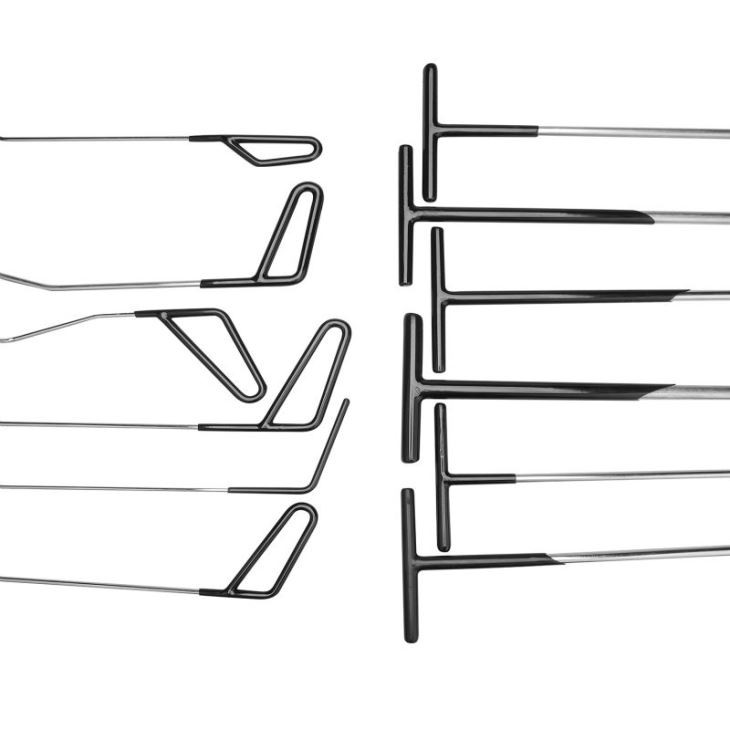
I-CAR's PDR corrosion-protection guidance explains that rod contact can disturb coatings on the backside of a panel even where the exterior does not need refinishing. It recommends restoring protection rather than assuming that a protected tool tip prevented all damage.
That creates a separate completion task. Surface correction, paint inspection, reassembly, and corrosion-protection restoration answer different questions. Passing one does not automatically close the others.
Plan the restoration before beginning the repair. If the shop discovers only at the end that it lacks the permitted access, material, or application equipment, the repair may remain incomplete despite a good cosmetic result.
Identify the applicable protection system
Retrieve the vehicle's current repair information and identify which material and procedure apply to the affected location. Cavity protection, seam sealing, primer, and other coatings are not interchangeable labels for the same operation.
3M's corrosion-protection resource page provides separate product and procedure resources for different protection tasks. These are application-specific resources. They do not establish that every 3M product is approved for every vehicle or that one general application recipe replaces OEM instructions.
Review the relevant technical and safety data sheets alongside the vehicle procedure. Confirm surface preparation, application conditions, equipment, protective measures, and any drying or reassembly requirements for the chosen material.
Create a restoration record before access is closed
| Record | What it should establish |
|---|---|
| Vehicle and area | The exact panel and section treated |
| Reason for restoration | The operation or observation that could have disturbed protection |
| Procedure reference | OEM document and material instructions used |
| Material identity | Product reference, batch where available, and suitability for the location |
| Preparation | The actual preparation completed under the applicable instructions |
| Application | Equipment, access route, relevant settings or conditions required by the procedure |
| Inspection | Visible coverage, limitations of observation, and checks for unintended contamination |
| Reassembly | Removed components restored and required functions checked |
This is a proposed record structure. It does not replace the shop's required repair documentation or any insurer, vehicle-maker, or legal record requirements.
Manage visibility honestly
Some treated areas are difficult to see directly. Use the inspection methods allowed and appropriate for the job, and record the limits of what could be observed. A photograph of an application wand entering a cavity is evidence that an action occurred, but it does not prove complete coverage throughout that cavity.
Where the procedure requires a particular application route or equipment, document that it was used. Keep process evidence and inspection evidence distinct. If complete verification cannot be obtained, follow the applicable procedure for resolving the uncertainty rather than signing off an unsupported conclusion.
Protect components and passages that should not receive the material. Confirm relevant drain paths, seals, trim, and moving or electrical parts are not unintentionally obstructed or contaminated. The exact precautions come from the vehicle and product instructions, not a generic spray wherever the rod went approach.
Assign the task when more than one company is involved
Mobile PDR work is sometimes completed inside another repairer's job. Before starting, agree who identifies the applicable corrosion-protection requirement, supplies the approved material, performs the restoration, and checks completion.
Record a handover while the necessary access remains available. A contractor should not assume that the host shop will apply protection after trim has been reinstalled. The host shop should not assume the contractor has done it because the exterior repair is finished.
The completion record can be concise: work performed, area affected, procedure used, restoration completed, evidence location, and remaining work. Clear ownership of the task matters more than a long generic disclaimer on the invoice.
Illustrative incomplete repair
A dent is corrected through rear access. The technician verifies the exterior under a reflection light and reinstalls the trim. Later, the job reviewer finds that there is no record of backside protection assessment or restoration.
The missing record does not prove that corrosion has developed, but it prevents a confident conclusion that the required work was completed. The shop should review the operation and applicable procedure, then resolve the gap. It should not create a retrospective record claiming an application that nobody can verify.
The preventive change is to place the restoration check before the reassembly release, while the area is still accessible and the technician can document what was done.
Distinguish materials from performance claims
Do not convert a material manufacturer's laboratory test into a guarantee that a repaired vehicle will never corrode. Test substrate, preparation, coating system, environment, and application conditions matter. A product claim and the quality of a particular repair are separate evidence questions.
Likewise, do not advertise a fixed protection lifespan from a generic PDR tool description. The SuperPDR final-inspection guide treats hidden repair obligations as part of acceptance, while the access-planning guide helps identify the route and components that need attention.
Closing the repair
Before releasing the vehicle, check that the specified restoration has been completed, relevant evidence is retained, access components are correctly reinstalled, and any required downstream checks are finished. Escalate a missing material approval or unresolved coverage issue rather than disguising it with a generic protection applied note.
For a purchasing team, include application equipment, compatible replacement parts, instructions, and safe storage needs in the overall shop plan. A rod kit alone is not a complete corrosion-protection system.