

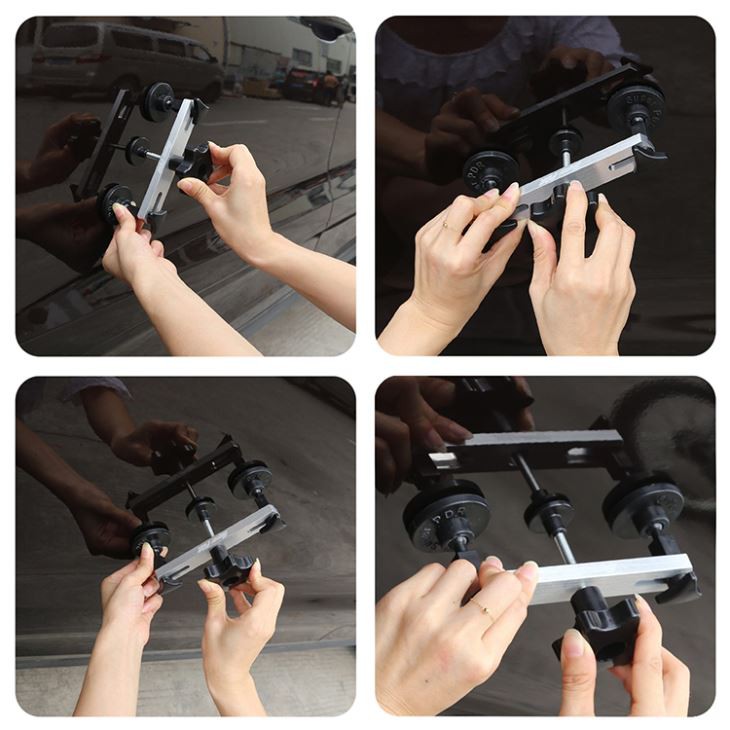
Hail damage is repaired with PDR by inspecting each affected panel, mapping dent size and count, choosing rear access or glue pulling, moving the metal under a reflection light, reducing crowns and highs, and checking the final surface from multiple angles. PDR is a leading repair method for shallow hail dents when the paint is intact and the panel has not been stretched beyond recovery.
Hail repair is different from a single door ding. The challenge is volume, consistency, and workflow control.
Quick answer
Hail damage PDR should begin with clean inspection and dent mapping, then split the repair plan by panel access: rods and hooks where rear access is safe, glue pulling where access is blocked, and line-board finishing for final surface control.
Hail repair workflow summary
| Stage | Purpose | Tools commonly used |
|---|---|---|
| Wash and visual inspection | Remove dirt and reveal damage | Cleaners, inspection light |
| Dent mapping | Count and classify dents by panel | Line board, marker, dent map |
| Repairability check | Identify cracked paint, sharp dents, access limits | Reflection light, close inspection |
| Access planning | Decide rod access, trim removal, glue pulling | Rods, wedges, trim tools |
| Dent movement | Lift lows and reduce crowns | Rods, hooks, glue tabs, pullers |
| Finishing | Remove highs, tool marks, waves | Knockdown, blending hammer, fog board |
| Quality control | Verify consistency across panels | LED line board, natural light check |
Step 1: Clean and inspect the vehicle
A dirty vehicle hides small hail dents. Washing the panel gives the technician a clean surface for reflection reading and glue pulling. After cleaning, inspect the hood, roof, trunk, rails, doors, fenders, and quarter panels.
Use a PDR light or line board rather than normal overhead light. Hail dents can disappear in normal light and reappear under reflection. A good inspection also checks paint condition. If paint is cracked or chipped at the impact point, the repair may need conventional refinishing.
Step 2: Map dents by panel
Dent mapping turns a large repair into a controlled job. Record dent count, dent size, and damage severity by panel. This helps with estimating, tool planning, technician assignment, and final QA.
A simple classification can use:
- Small shallow dents.
- Medium dents with visible crown.
- Large dents with panel tension.
- Sharp dents or edge-area dents.
- Non-PDR candidates with cracked paint or severe stretch.
The map should also note access restrictions: double-wall areas, braces, rails, sunroof structures, and trim-sensitive zones.
Step 3: Choose rear access or glue pulling
Rear-access rod work is precise and efficient when the technician can safely reach the dent. Hoods and trunks often offer good access after insulation or trim is removed. Roof rails and double-wall areas may require glue pulling.
Glue pulling is useful for:
- Dents with no rear access.
- Starting large shallow lows.
- Double-wall sections.
- Panels where trim removal would be inefficient.
- Fast repeated movement on similar dents.
Rod work is useful for:
- Finishing texture.
- Sharp point control.
- Dents near body lines.
- Reducing lows after glue pulling.
- Areas where the back side is reachable.
Step 4: Use consistent lighting
Hail repair depends on consistent reflection. If the light position changes too often, dent size and finish become hard to compare. Technicians should set a repeatable lighting angle for each panel.
For large horizontal panels such as hoods and roofs, LED light boards can reveal dent rows and patterns. For vertical panels, the technician may need to adjust board height and angle to keep lines readable.
Step 5: Repair in a logical sequence
A technician can lose time by jumping randomly between dents. Better sequences include:
- Work panel by panel.
- Group dents by size.
- Start with access-friendly areas.
- Use similar tools for similar dents.
- Finish each section before moving too far away.
- Re-check completed panels under a second angle.
For heavy hail, workflow organization can matter as much as tool skill.
Step 6: Manage crowns and highs
Hail dents often have small crowns around the low. If a technician pushes only the center, the panel can become bumpy. Each dent needs a controlled cycle: read, move, knock down, re-read.
Highs should be corrected early. Many small highs across a hail panel make the final finish look noisy even if the lows are reduced.
Step 7: Final QA
Final inspection should include:
- Reflection check from multiple angles.
- Natural light or shop light check.
- Panel-to-panel consistency.
- Edge and body-line inspection.
- Trim reinstallation check.
- Clean surface check for residue or marks.
For shops, final QA should be documented. For distributors, hail repair tool sets should support this workflow with lighting, rods, glue systems, knockdowns, and organized storage.
When hail damage is not a good PDR candidate
PDR may not be appropriate when:
- Paint is cracked or missing.
- The dent is extremely sharp and stretched.
- The panel edge is folded.
- The roof structure is damaged.
- There is prior body filler or weak repaint.
- The customer expects a result beyond what the panel condition allows.
A responsible technician explains these limits before repair.
Super PDR tool path
A hail repair setup may include Super PDR hook rods, glue tabs, glue gun, mini lifter, slide hammer, LED line board, knockdowns, blending hammer, wedges, and organized storage. For a shop or distributor, the best hail kit is one that supports inspection, movement, and finishing – not only pulling force.
Team workflow for shops
A body shop or mobile hail team should divide hail repair into roles when volume is high. One person may handle intake photos and dent mapping, another may prepare access and trim, while technicians work panels in sequence. Final QA should not be performed only by the same person who repaired the panel when the job is large.
A practical team process is:
- Intake: confirm vehicle, panels, paint condition, prior damage, and customer expectations.
- Mapping: count dents by size and panel, then assign repair priority.
- Access: remove only necessary trim and protect glass, wiring, and seals.
- Repair: work panel groups with consistent lighting and tool choice.
- Detail: remove glue residue and clean the panel.
- QA: inspect under line board and natural light before delivery.
This process reduces missed dents, repeated trim work, and inconsistent panel finish.
Estimating and documentation
Hail repair estimates should separate repairability from repair time. A small dent count on a difficult roof rail can take longer than a higher count on an open hood. Documentation should include dent count, affected panels, non-PDR damage, access notes, and photos under reflection.
For distributors and tool buyers, estimating also affects kit selection. A shop that handles hail volume needs multiple lighting setups, tab variety, organized storage, and consumable replenishment. A user repairing occasional small dents may not need the same hail-focused kit.
Common hail repair failure modes
- Missing small dents because the panel was inspected in normal light only.
- Overpulling many dents and creating a noisy surface.
- Ignoring crowns around larger hail impacts.
- Losing time because tools and tabs are not organized.
- Removing unnecessary trim and increasing risk.
- Delivering the vehicle without a second-angle inspection.
The best hail workflow combines speed with repeatable inspection. Fast pulling without final reflection control produces poor results.
Short FAQ
Is PDR good for hail damage?
Yes, PDR is well suited for many shallow hail dents when the paint is intact and the panel is not severely stretched.
Does every hail dent need glue pulling?
No. Many dents can be repaired with rods if rear access is available. Glue pulling is used when access is limited or when it is efficient for the dent type.
Why does hail repair take so long?
A vehicle may have hundreds of small dents. Each dent needs inspection, controlled movement, and final reflection checks.
Can hail damage on aluminum panels be repaired?
Often yes, but aluminum requires careful pressure control and technician experience.