

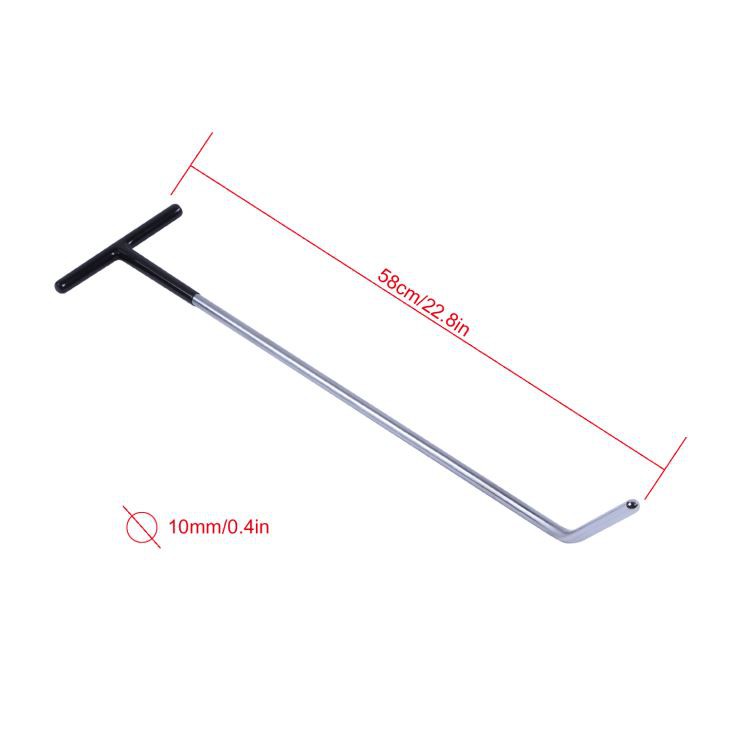
PDR can repair many door dings, soft creases, and some body-line dents when the paint is intact and the metal is not severely stretched. The repair approach depends on dent sharpness, crown size, panel access, body-line shape, paint condition, and whether the damage is near an edge, brace, or double-wall structure.
A small door ding can be simple. A sharp dent on a body line can be one of the hardest PDR repairs on the vehicle.
Quick answer
PDR can often repair soft door dings and many body-line dents when paint is intact, but sharp dents and folded lines need slower tool movement, crown control, and careful finishing. Cracked paint or severe stretch changes the repair recommendation.
Door ding repairability matrix
| Damage pattern | PDR outlook | Main challenge | Typical approach |
|---|---|---|---|
| Round parking-lot ding | High | Finding the exact low | Rod or glue pull, small knockdown |
| Soft vertical crease | Medium to high | Long metal movement | Rod and crease tab combination |
| Sharp center ding | Medium | Stretched impact point | Micro pushes, crown control |
| Body-line dent | Medium | Restoring design ridge | Specialized tips, line reading, blending |
| Door edge dent | Low to medium | Folded hem and access | Limited access or glue pull |
| Dent with chipped paint | Low for pure PDR | Coating damage | Shape improvement plus refinishing decision |
Why door dings vary so much
Door dings are usually caused by a concentrated impact from another door, shopping cart, tool handle, or small object. Two dings with the same diameter can require different repairs because the impact depth and panel location are different.
The technician checks:
- Is the paint cracked at the center?
- Is there a crown around the low?
- Is the dent on a flat area, curved area, or body line?
- Can the back of the dent be reached?
- Is the panel steel or aluminum?
- Is there brace glue or double-wall metal behind it?
Soft dents versus sharp dents
A soft dent has a gradual low and usually responds well to controlled pressure. A sharp dent has a concentrated point and may include stretched metal. Sharp dents need slower movement. The technician must avoid creating a volcano-shaped high around the center.
For a sharp dent, the first repair move may be crown reduction rather than pushing the center. If the crown locks the metal, direct pressure on the center can make the finish worse.
Body-line dents
A body line is a designed ridge or contour in the panel. When a dent crosses it, the technician must restore not only the low spot but also the original design line. This requires accurate reflection reading.
The line board should show whether the body line is displaced, flattened, folded, or only interrupted by a small low. The tool path may include:
- Reduce surrounding crown.
- Re-establish the main body-line shape.
- Lift the low gradually.
- Knock down highs along the ridge.
- Check the body line from multiple angles.
A body-line repair often takes longer than a similar-size dent on a flat panel.
Rear access strategy
Door panels can be accessed through window openings, trim areas, factory holes, and internal structures. Access should be safe and should avoid damage to glass, wiring, trim clips, weather seals, and corrosion protection.
When access is limited, glue pulling may be used from the outside. However, glue pulling on a sharp body-line dent must be controlled because a strong pull can overcorrect the ridge.
Using knockdowns and blending
Many door ding repairs need knockdown work. As metal moves upward, small highs can appear. A knockdown helps reduce those highs. A blending hammer can soften wider crowns and waves.
A technician should not treat knockdown as a mistake correction only. It is part of the normal PDR process. The metal is moved from both directions: up from lows and down from highs.
What customers and buyers should understand
PDR is often the best option for door dings because it can preserve paint and avoid filler. But the final result depends on the dent condition. A technician can usually estimate better after seeing the dent under a PDR light.
Photos help, but they should include:
- A straight-on photo.
- An angled reflection photo.
- A close-up of the impact point.
- A wider photo showing panel location.
Super PDR tool path
For door dings and body-line dents, the tool path may include rods, hooks, soft tips, sharp tips, glue tabs, mini lifter, bridge puller, knockdown, blending hammer, and LED line board. A complete kit should support both movement and finishing.
Example repair decision paths
A shallow round door ding on an open door skin may start with rear-access rod work. The technician places the line board, finds the low, confirms tool-tip location, and makes small pushes while reducing any high spots.
A door ding behind a brace may start with glue pulling. The technician cleans the panel, selects a tab that matches the low, performs a controlled pull, removes glue, then uses the line board to decide whether another pull or knockdown work is needed.
A body-line dent often starts with shape restoration rather than center lifting. The technician reads the original line on the undamaged side of the panel, then moves the damaged ridge slowly until the design line returns. Only then should the surrounding low and crown be finished.
Failure modes to avoid
Sharp dents and body-line repairs fail when the technician moves too much metal too quickly. Common mistakes include:
- Pushing the center before reducing the crown.
- Using a large glue tab on a small sharp impact.
- Pulling a body line outward without checking the ridge shape.
- Creating a high spot and continuing to push around it.
- Finishing from only one light angle.
- Ignoring chipped paint at the impact point.
A patient sequence is usually faster than correcting a bad first move.
Buyer guidance for tool matching
For door dings, a buyer should prioritize precision tools: smaller tips, controlled rods, mini lifters, bridge pullers, knockdowns, and a reliable line board. For body lines and creases, add crease tabs, longer rods, whale tails, and blending tools.
Distributors should avoid presenting all dent pullers as equal. A bridge puller, mini lifter, slide hammer, and rod set solve different problems. Clear product descriptions should state which dent type each tool supports and which limitations still apply.
Inspection questions for customer intake
A shop can improve estimates by asking the same questions every time:
- Where is the dent located on the vehicle?
- Is the paint cracked, chipped, or scratched?
- Is the dent on a body line, edge, or flat area?
- Has the panel been repaired or repainted before?
- Can the customer provide a reflection photo?
- Is there more than one dent on the same panel?
These questions help the technician decide whether to request an in-person inspection before promising a result.
Why sharp dents take more time
A sharp dent concentrates force into a small area. The metal may be stretched at the impact point and locked by a crown around the dent. The technician may need to make many small pushes rather than one large move. Highs must be reduced early because a sharp high is very visible under a line board.
For customers and buyers, this explains why a small sharp dent can cost more time than a larger soft dent. Size is only one part of repair difficulty.
Short FAQ
Can PDR fix a sharp door ding?
Often it can improve or repair the dent if paint is intact, but sharp dents require more skill and may not finish like a shallow round ding.
Can PDR repair a dent on a body line?
Many body-line dents are repairable, but they require precise reflection reading and controlled pressure.
Can glue pulling fix door dings?
Yes, especially when rear access is blocked. Final finishing may still require knockdown work or rod access.
Is a chipped door ding still PDR?
If paint is chipped, the shape may be improved with PDR, but the repair is not fully paintless because the coating damage remains.